


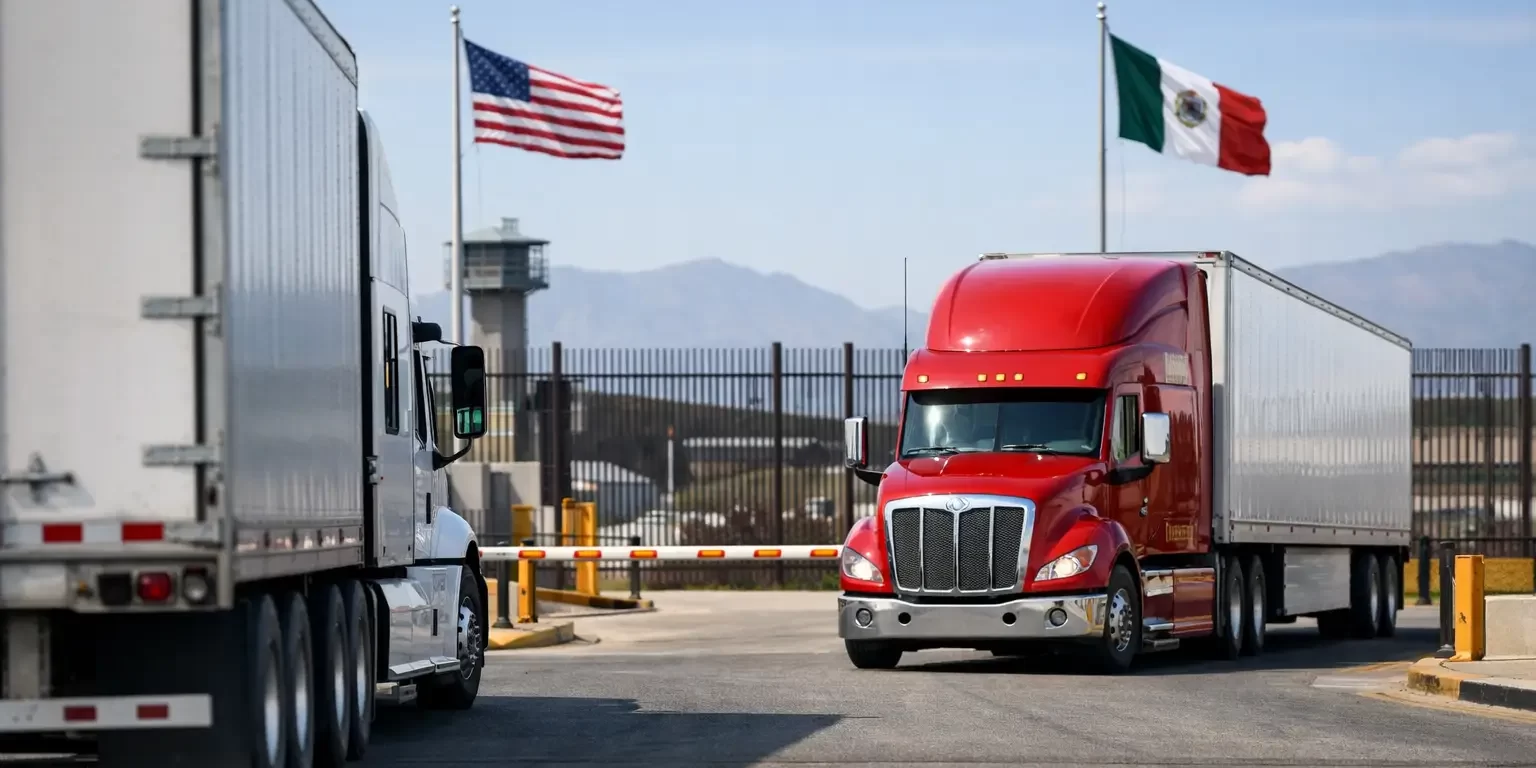
A truck can be loaded on time, dispatched on schedule, and still lose a full day at the border. For
importers, exporters, and distribution teams, that is where cross border trucking logistics stops
being a transportation task and becomes an execution issue. Delays rarely come from one major
failure. More often, they come from small gaps in paperwork, poor coordination between parties,
unclear handoffs, or routing decisions that did not account for customs realities.
For companies moving freight between Costa Rica, the United States, and connected markets,
the real question is not simply how to book capacity. It is how to build a process that keeps cargo
compliant, visible, and moving from pickup to final delivery. That requires transportation
planning, customs alignment, documentation control, and warehousing support when timing does
not line up perfectly.
What cross border trucking logistics really involves
Cross border trucking logistics is often treated as linehaul plus customs clearance. In practice, it
is broader than that. It includes pickup scheduling, cargo classification, commercial invoice
accuracy, transit documentation, border coordination, bonded or temporary storage if needed,
final-mile delivery planning, and communication across multiple operators.
That matters because cross-border freight does not fail only on the road. It fails when one part of
the chain assumes another party has handled compliance, appointment scheduling, or document
validation. A carrier may be ready to move, but if the shipment data does not match the goods, or
if customs entries are incomplete, transportation capacity will not solve the problem.
The strongest operating model is one where trucking, customs brokerage, and shipment visibility
are managed as part of the same plan. That reduces handoff risk and gives importers and
exporters a clearer path to control costs, timing, and customer commitments.
Why delays happen in cross border trucking logistics
Border delays are usually predictable, even when the exact timing is not. Traffic volume,
inspection rates, document review, commodity sensitivity, and cut-off times all affect transit
performance. The issue for shippers is that many of these variables are not managed early
enough.
A common example is incomplete commercial documentation. If product descriptions are vague,
declared values are inconsistent, or tariff classification is questionable, customs review becomes
more likely. Another frequent issue is cargo readiness. A shipment may be booked for departure,
but if the packaging, labeling, or counts are not aligned with the documents, the shipment is
exposed before it even reaches the border.
Routing also plays a role. The shortest route is not always the best route. Depending on
commodity type, border crossing conditions, destination delivery windows, and warehouse
availability, a slightly longer route may produce better reliability. This is where operational
judgment matters more than rate shopping alone.
The role of customs in trucking performance
Customs is not a separate step from transportation. It is one of the main drivers of transportation
performance. When brokerage planning starts too late, trucking schedules become fragile. When
customs planning starts early, dispatch decisions improve.
That means shipment data should be reviewed before pickup, not after the truck is en route.
Product descriptions should be commercially accurate. Supporting documents should match
quantities, values, and origin information. If permits, product registrations, or special handling
requirements apply, they should be confirmed in advance.
For businesses with recurring lanes, standardization helps. Using consistent product data,
repeatable document controls, and established customs procedures reduces exceptions over time.
It does not eliminate inspections or regulatory changes, but it lowers the number of avoidable
disruptions. Bonded transportation service — where a carrier is authorized to move goods
under customs control before duties are settled — is one of the clearest examples of this
kind of standardization, since it gives customs authorities a formal guarantee rather than a
case-by-case exception.
Visibility is more than tracking a truck
Many shippers ask for visibility and mean location updates. That is part of the picture, but it is
not enough for international freight. A useful visibility model shows where the truck is, what
stage the customs process is in, whether documents are complete, and whether any warehouse or
delivery appointment issue is likely to affect final transit.
This is especially important when inventory is tied to customer commitments, retail
replenishment, or production schedules. A shipment that appears in transit may still be
commercially at risk if the customs release is pending or if destination handling has not been
confirmed.
Strong visibility also changes internal decision-making. Procurement teams can adjust receiving
plans. Operations managers can prepare for delays before they become urgent. Customer service
teams can communicate with more confidence. In cross-border freight, good information often
saves more money than a small reduction in linehaul cost.
When warehousing becomes part of the solution
Not every shipment should move directly through the network without a pause. In some cases,
warehousing or bonded storage is the practical answer. That is true when delivery timing does
not match border arrival, when cargo needs to be staged for distribution, or when customs release
and inland transportation need to be coordinated more carefully.
This is where integrated logistics matters. A transportation provider that can also support storage,
cargo handling, and customs coordination can give businesses more options when a shipment
does not follow the ideal timeline. Instead of turning a timing mismatch into a service failure, the
shipment can be redirected into a controlled next step.
The trade-off is cost versus continuity. Storage adds expense, but it may prevent detention,
missed delivery windows, stockouts, or rushed rework. For many businesses, that is a reasonable
operational decision.
Choosing the right operating model
There is no single best model for every shipper. A distributor with steady replenishment volumes
may prioritize consistency and routine border procedures. A manufacturer moving time-sensitive
inputs may care more about contingency planning and exception management. An e-commerce
business may need tighter delivery coordination and fulfillment support after import.
What matters is whether the logistics setup matches the business requirement. If speed is the
priority, the network needs fast document readiness and disciplined appointment planning. If cost
control is the priority, shipment consolidation and routing efficiency may matter more. If the
shipment is specialized or high value, cargo handling capability and compliance discipline
become central.
This is why many commercial shippers move away from fragmented provider structures.
Managing one company for trucking, another for customs, another for storage, and another for
delivery can work, but it increases handoff risk. An integrated operator can often reduce friction
because transportation and trade support are being managed with the same service objective in
mind.
What experienced shippers look for in a logistics partner
In practice, importers and exporters usually evaluate a provider on three levels. First, can the
provider physically move the freight across the required lanes with dependable coverage.
Second, can the provider manage customs and documentation without creating repeat issues.
Third, can the provider support the exceptions that happen in real operations, including storage,
delivery changes, special cargo handling, or urgent communication.
Experience in the specific trade lane matters. So does local presence. Cross-border execution
improves when the provider understands not only the transport route, but also the customs
environment, operating conditions, and service expectations on both sides of the movement. That
is one reason companies often prefer a partner with direct operational reach rather than a purely
transactional booking model.
SICSA operates with that end-to-end perspective, supporting freight, customs, storage, and trade
execution for businesses that need consistent coordination between Costa Rica, the United States,
and broader international markets. That reach extends beyond the Costa Rica–U.S. corridor:
SICSA maintains strategic operations and partnerships in Spain, Mexico, Brazil, Italy,
Germany, and Colombia, backed by a network of more than 250 partnerships worldwide
— coverage that matters when a shipment's origin or destination sits outside the primary
lane.
Building a more reliable cross-border process
Improving results in cross border trucking logistics usually starts with a basic operational review.
Are shipment documents being validated before dispatch. Are commodity details standardized
across teams. Is there a clear owner for customs readiness. Are warehouse and delivery
appointments aligned with likely border timing. Is the shipper receiving proactive updates that
help them act early.
These are not complex questions, but they reveal where avoidable delays begin. In many cases,
the issue is not lack of effort. It is lack of coordination across transportation, customs, and
receiving operations.
Businesses that move freight regularly across borders benefit from treating logistics as a
managed process instead of a series of bookings. That shift improves predictability, supports
compliance, and gives the supply chain more room to handle disruption without losing control.
The companies that perform best in cross-border trade are not always the ones with the lowest
rate. They are usually the ones with the clearest process, the best coordination, and a logistics
partner that can solve problems before the truck reaches the border.