


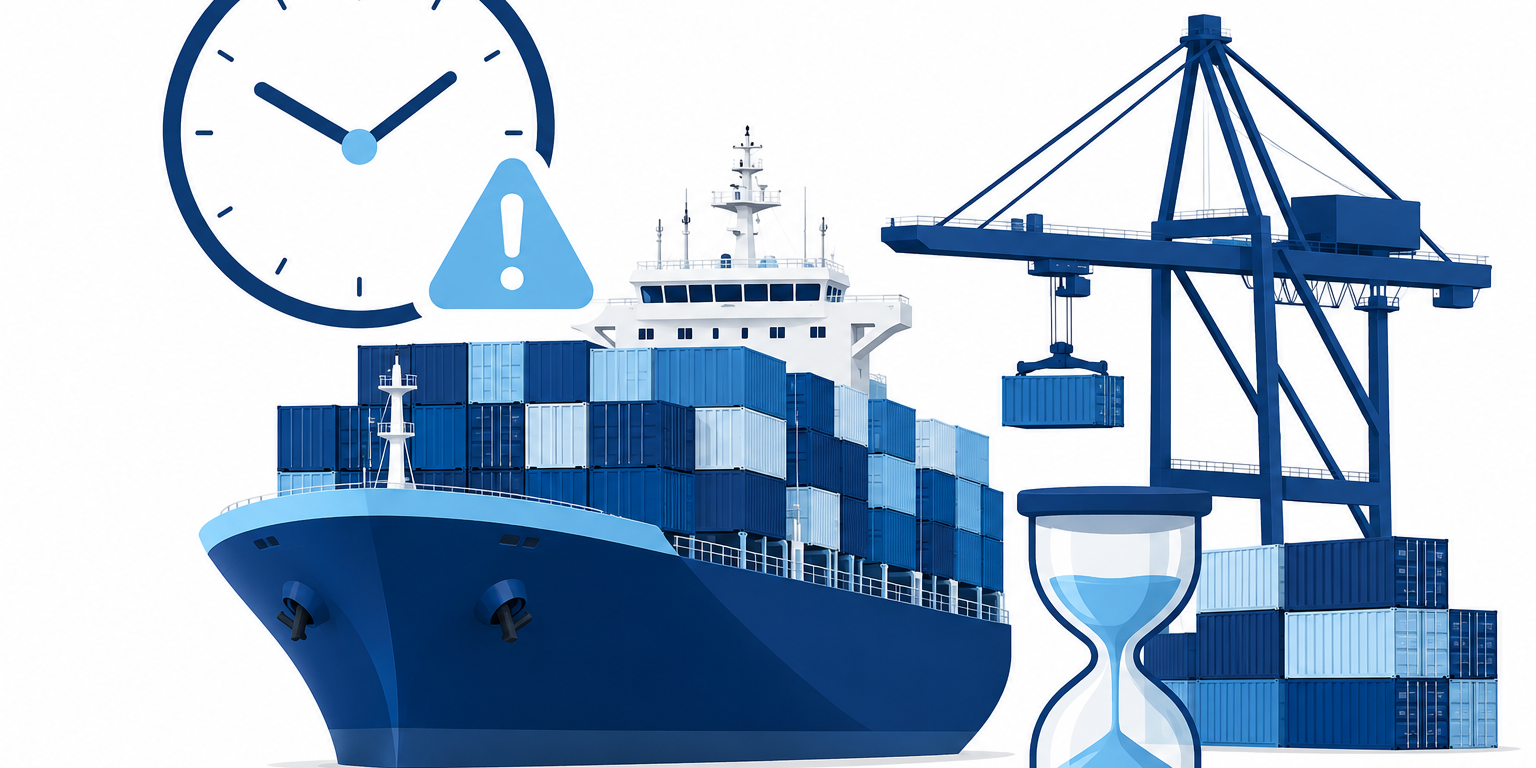
A container can arrive on schedule, clear the ocean crossing, and still create an unexpected cost before it ever leaves the port. So, what is demurrage? It is a charge assessed when an import container remains at a marine terminal beyond the free time allowed by the carrier or terminal. For importers and exporters managing time-sensitive freight into or out of Miami and across Latin America, demurrage is not just a line item. It is a signal that cargo release, documentation, trucking, terminal access, or customs coordination has fallen out of sequence.
What Is Demurrage in Ocean Freight?
Demurrage is generally charged for the use of terminal space after the free period expires. Once a container is discharged from a vessel, the carrier or terminal provides a defined number of free days for the consignee or its authorized agent to arrange release and pickup. If the container remains in the terminal after that period, demurrage begins to accrue.
The purpose is operational. Marine terminals have limited space and must keep containers moving to receive new vessel cargo, position exports, and maintain safe access for equipment and trucks. Charges encourage timely pickup and help offset the terminal congestion created by cargo that remains in place.
The exact trigger, rate, and responsible party depend on the carrier’s tariff, bill of lading terms, terminal rules, and local conditions. Free time may begin on the day of discharge, the next calendar day, or when the container becomes available for pickup. It may also be calculated in calendar days rather than business days. A weekend, holiday, weather closure, customs hold, or port congestion event does not automatically stop the clock.
Demurrage rates often increase as days pass. A container that misses pickup by one day may generate a manageable charge; a container delayed for a week can create a significant unplanned expense, especially when multiple containers are involved.
Demurrage vs. Detention: The Difference Matters
Demurrage and detention are frequently used together, but they refer to different stages of container movement.
Demurrage applies while the container is still inside the terminal or port area. Detention usually applies after the container has been picked up and moved outside the terminal, but the empty equipment is not returned to the designated depot by the required date.
For example, an importer may be unable to collect a container because the original bill of lading has not been released, customs documentation is incomplete, or a truck appointment is unavailable. The resulting terminal charge is demurrage. If that importer picks up the container but delays unloading at its warehouse and returns the empty late, the carrier may charge detention instead.
Both charges can affect the same shipment, and both can rise quickly. Separating them in internal reporting is essential because the corrective action is different. Demurrage points to release and pickup controls; detention points to delivery scheduling, unloading capacity, and empty-return coordination.
Why Demurrage Charges Occur
The most common cause is not a vessel delay. It is a lack of readiness after arrival. Ocean freight involves several parties: carrier, terminal, customs broker, consignee, freight forwarder, drayage provider, warehouse, and sometimes a bank or regulatory agency. A delay at any handoff can hold the container at the terminal.
Documentation problems are a frequent source of exposure. A missing arrival notice, unpaid ocean freight, incomplete commercial invoice, inconsistent consignee details, or delayed bill of lading release can prevent cargo from being released. For shipments subject to customs exams, permits, or product-specific regulations, the documentation review may require additional time that was not built into the original pickup plan.
Trucking capacity and terminal appointment availability can create the same result. A shipment may be released by customs and paid in full, yet still accrue demurrage if no appointment can be secured before free time expires. This risk is especially relevant during peak seasons, vessel bunching, port congestion, labor disruptions, severe weather, and holidays.
Warehouse readiness also matters. If a facility cannot receive the container, lacks labor for unloading, or does not have space for the goods, the drayage provider may be unable to retrieve the load. For regulated products, a hold may arise because the receiving location, temperature-control plan, product records, or required approvals are not confirmed in advance.
Export cargo can face related terminal storage charges when containers are gated in too early or miss the vessel cutoff. The terminology and policies vary by carrier and terminal, so shippers should review the applicable export receiving window and tariff rather than assume import rules apply in reverse.
How Free Time Should Be Managed
Free time is a planning constraint, not an administrative detail to review after the vessel arrives. Before the shipment departs, confirm the contracted free time for both demurrage and detention, where the clock starts, whether the rate is progressive, and which party is authorized to request an extension.
A lower ocean rate with minimal free time can cost more than a higher rate with terms that match the consignee’s receiving capacity. This is particularly true for full-container loads routed to inland destinations or cargo requiring customs clearance, specialized handling, bonded storage, or an appointment-based delivery.
Use the carrier’s arrival information as an early warning, not as a final instruction. Estimated arrival dates can change, sometimes by several days. The operating team should track vessel status, terminal availability, customs release status, carrier holds, payment status, and drayage appointments in one working plan. When these details are managed in separate email chains, a release issue can remain unnoticed until free time is nearly exhausted.
It is also wise to establish who owns each decision. The importer may be responsible for customs documents and carrier payment, while the broker monitors clearance, the forwarder coordinates milestones, the trucker secures appointments, and the warehouse confirms delivery availability. Clear ownership prevents the common assumption that another party has already resolved a hold.
Practical Controls to Reduce Demurrage Risk
Preventing demurrage requires preparation before arrival and disciplined follow-through once the vessel is near port. The following controls are especially effective for recurring import programs:
- Confirm commercial documents, customs entry data, permits, and consignee details before the cargo reaches the destination port.
- Review carrier free-time terms and terminal rules at booking, not after discharge.
- Pre-book or reserve drayage capacity when freight moves during peak periods or into appointment-constrained terminals.
- Verify warehouse receiving hours, unloading labor, equipment needs, and available space before scheduling pickup.
- Track carrier, terminal, customs, and payment holds daily until the container is physically out-gated.
- Create escalation rules for containers with limited free time, customs exams, missing documents, or unavailable appointments.
These controls need to be adapted to the shipment. A standard consumer-goods container may require a simple pickup plan, while medical supplies, machinery, bonded cargo, or products with regulatory requirements may need earlier document validation and contingency storage. The right process depends on the route, cargo profile, terminal, carrier terms, and destination’s ability to receive freight.
What to Do When a Charge Is Already Accruing
Once demurrage is at risk, speed and evidence matter. First, identify the precise reason the container cannot move: customs hold, carrier release, payment issue, terminal appointment shortage, trucking limitation, warehouse refusal, or documentation discrepancy. Vague explanations do not resolve operational delays or support a charge review.
Next, document each milestone with dates and times. Retain arrival notices, release confirmations, customs communications, appointment attempts, terminal closure notices, and correspondence with the carrier or trucker. If a delay resulted from a terminal outage, carrier system failure, government hold, or an event outside the consignee’s control, this record may support a request for mitigation or a billing review.
A waiver is never guaranteed. Carriers and terminals apply their published rules, and the party named on the bill of lading may remain financially responsible even when another service provider caused the delay. Still, prompt escalation with complete records is more effective than disputing an invoice weeks later without evidence.
For cargo that cannot move directly to its final destination, temporary storage can sometimes protect the larger supply chain. A bonded warehouse may be appropriate when customs requirements, cargo availability, or downstream delivery timing require a controlled alternative. The cost must be compared carefully with ongoing demurrage, trucking, handling, and detention exposure. SICSA coordinates these decisions with the practical realities of Miami gateways and Latin American trade lanes, where port, customs, and final-mile timing must work together.
Build Demurrage Into Shipment Planning
Demurrage is often treated as an avoidable penalty, and many cases are avoidable. But a realistic operating plan also recognizes that vessel schedule changes, inspections, weather, terminal congestion, and equipment constraints can occur even when documents are accurate. The objective is not to assume zero disruption. It is to create enough visibility, time, and accountability to respond before free time turns into escalating charges.
For each container, ask a simple question before arrival: if the cargo becomes available tomorrow, can every requirement for pickup be completed on time? When the answer is clear – including documents, payment, customs release, truck appointment, and warehouse acceptance – demurrage becomes a manageable exception rather than a recurring cost of doing business.