

A delayed production component, a missed retail launch, or inventory that arrives weeks before it can be sold can cost far more than the freight bill. Knowing how to select shipping modes is therefore not simply a transportation decision. It is a commercial decision that affects inventory, customer commitments, customs execution, and cash flow.
For importers and exporters moving between Costa Rica, the United States, and international markets, the right answer is rarely the cheapest quoted rate or the fastest transit time in isolation. The effective mode is the one that moves the shipment reliably within its required delivery window while accounting for the full cost and operational risk of the shipment.
How to Select Shipping Modes Based on Business Need
Start with the delivery requirement, not with the mode. Ask when the consignee truly needs the goods available for use, sale, installation, or production. That date is different from the date a shipment needs to arrive at a port or airport. It must allow for customs clearance, terminal handling, inland delivery, receiving appointments, and any warehouse processing.
Once the required delivery date is clear, evaluate what happens if it is missed. A two-day delay may be manageable for replenishment inventory with available stock. For a line-down manufacturing part, a product launch, or temperature-sensitive goods, the same delay may be unacceptable. The consequence of delay helps determine whether air freight, ocean freight, ground transportation, or a combined solution is appropriate.
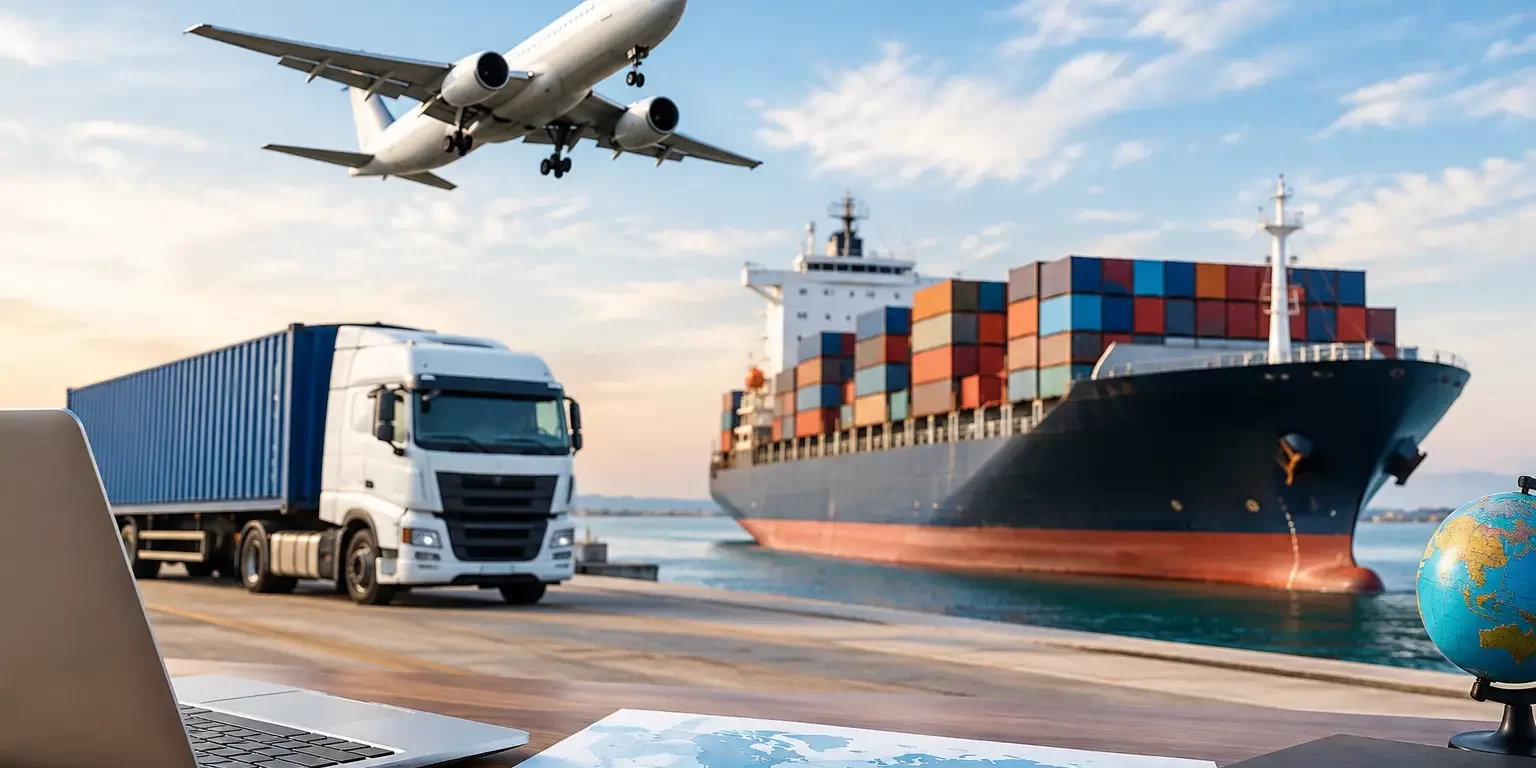
The second question is volume. Air freight is usually justified for urgent, high-value, low-weight, or compact cargo. Ocean freight is typically the more economical option for heavier shipments, large volumes, and inventory that can follow a planned replenishment cycle. Ground freight is central for regional distribution and door-to-door movements across connected markets, particularly when transit times are predictable and cargo can move directly to the consignee.
A shipping mode should also match the purpose of the shipment. Samples, replacement parts, and urgent e-commerce replenishment may require air service. Regular purchase orders, machinery, retail inventory, and raw materials often fit ocean schedules. Project cargo may require specialized trucking, breakbulk, flat racks, or coordinated multimodal transportation rather than a standard container or airport-to-airport service.
Compare Total Cost, Not Freight Rate Alone
A low ocean freight rate can be misleading if inventory sits at the origin waiting for a sailing, arrives too late for demand, or incurs storage and demurrage because documentation is not ready. Likewise, air freight may carry a higher transportation charge but reduce stockout exposure, avoid a production interruption, or eliminate the need to hold several weeks of additional safety stock.
The relevant comparison is total landed and operating cost. This includes freight, origin and destination handling, fuel or security surcharges, insurance, packaging, customs brokerage, duties and taxes, storage, inland transportation, and the cost of inventory in transit. For international shipments, the Incoterm also matters because it defines which party is responsible for specific costs and risks at each point in the movement.
Consider a distributor importing fast-moving products into Costa Rica. Ocean freight may provide the best cost per unit for its standard monthly orders. But if sales exceed forecast and a key item is about to stock out, a smaller air shipment can protect revenue while the next ocean container remains in transit. This is not a choice between one mode and another forever. It is a planned use of different modes for different business conditions.
Match the Mode to the Cargo
Cargo characteristics can eliminate options before price is even considered. Weight and dimensions affect aircraft capacity, container selection, handling equipment, and road permits. Fragile cargo may require controlled handling and stronger packaging. Perishable, pharmaceutical, or temperature-sensitive products may need active or passive temperature management throughout the journey.
Hazardous materials add another layer of requirements. They must be correctly classified, packaged, marked, documented, and accepted under the rules that apply to the selected mode. Not every airline, vessel service, truck route, or warehouse can handle every hazardous commodity. Selecting a mode without confirming these requirements can create avoidable rejections, delays, and added charges.
High-value cargo requires a separate risk review. Route security, cargo visibility, airport or port dwell time, bonded storage availability, and final-mile controls may be as significant as transit time. For oversized industrial equipment, the key issue may be lift planning, route surveys, port capability, and specialized permits rather than the published schedule.
Build Customs and Warehousing Into the Transportation Plan
International freight does not end when a vessel docks or an aircraft lands. Customs documentation, tariff classification, permits, valuation, country-of-origin requirements, and government inspections can affect the actual delivery date. The selected mode must leave enough time for compliant entry processing, especially for cargo with regulated products or complex documentation.
This is particularly relevant when shipments move through the United States or Costa Rica before reaching their final market. A routing may be attractive on paper but create unnecessary clearance steps, fragmented responsibility, or exposure to storage charges if customs entries and documents are not aligned before arrival.
Warehousing can change the mode decision as well. Bonded warehousing may support importers that need to defer duty payment while goods remain under customs control or are re-exported. General warehousing may be the better fit when cleared inventory needs to be stored, picked, consolidated, or distributed locally. If a shipment will be broken down and delivered to multiple customers, the best transportation plan often combines international freight with destination storage and scheduled final delivery.
Choose Between Direct, Consolidated, and Multimodal Service
Direct service can reduce handoffs and may improve speed for time-sensitive cargo. Consolidated air or ocean freight can lower cost for smaller shipments, but it may involve additional cutoffs, handling, and transit variability. Full-container-load ocean freight gives shippers greater control over container loading and timing, while less-than-container-load service can make financial sense when cargo does not justify a full container.
Multimodal planning is often the most practical answer. An ocean container may move to a port, clear customs, transfer to a bonded or general warehouse, and continue by truck to several final destinations. An urgent portion of a larger order may travel by air while the balance moves by ocean. The objective is not to use the fewest modes. It is to control the handoffs, responsibilities, documentation, and delivery commitments across the full journey.
When comparing options, request equivalent service assumptions. A quote should identify the pickup point, delivery point, transit estimate, cutoff dates, included charges, cargo limitations, customs responsibilities, and any storage or detention exposure. A rate cannot be evaluated fairly if one option ends at the port and another includes door-to-door delivery.
Use a Repeatable Decision Process
A disciplined process prevents mode selection from becoming an emergency response each time a purchase order is released. First, segment shipments by urgency, cargo type, value, volume, and destination. Then establish service rules, such as using ocean freight for planned replenishment, air freight for approved exceptions, and ground distribution for regional final delivery.
Next, maintain a realistic lead-time calculation for each trade lane. Include supplier readiness, origin pickup, export clearance, consolidation time, port or airport processing, line-haul transit, import clearance, and destination delivery. Published transit time is only one part of the equation.
Finally, review performance after shipments move. Compare planned and actual transit, total landed cost, customs delays, cargo exceptions, and damage claims. These results reveal whether a lower-cost option is genuinely working or simply shifting cost into inventory, storage, or customer service problems.
For companies with frequent cross-border movements, one accountable operator can make this process more manageable by coordinating freight, customs, warehousing, and delivery as a connected operation. SICSA supports that approach with door-to-door logistics solutions designed around the cargo, route, and commercial requirement rather than a one-size-fits-all mode.
The best shipping decision is the one made early enough to create choices. When transportation, customs, and inventory teams work from the same delivery requirement, freight stops being a last-minute expense and becomes a controlled part of how the business serves its customers.