


A project cargo logistics company plans and controls the movement of freight that cannot
ship through normal containerized channels — oversized, heavy, high-value, or irregular cargo
that needs special equipment, route planning, permits, and customs coordination from origin to
final delivery. Its job is not just transport; it is making sure every component arrives in the right
sequence, in the right condition, with no broken handoffs.
A delayed production line, a missed port window, or a permit issue on an oversized load can
turn one shipment into a major operational problem. That is why choosing the right partner
matters. When cargo is oversized, high-value, irregular, or tied to a fixed installation schedule,
the plan has to be built around risk control, compliance, and execution discipline.
Project cargo is not standard freight with extra paperwork. It is cargo that
cannot move through conventional containers without special handling, equipment,
permits, or cargo engineering. The real question is not “can we ship it?” but “will
every moving part land in the right order, under the right conditions, with customs
and inland transport aligned?”
For importers, exporters, manufacturers, and EPC-related operations, that distinction defines
the entire project.
What a project cargo logistics company actually manages
It coordinates freight that falls outside normal shipping parameters: heavy machinery, industrial
components, plant equipment, construction materials, energy infrastructure, and any shipment
with unusual dimensions, weight, or handling needs.
The work starts long before cargo is loaded. The provider reviews specifications, dimensions,
origin constraints, destination access, transit options, and timing, then decides whether the
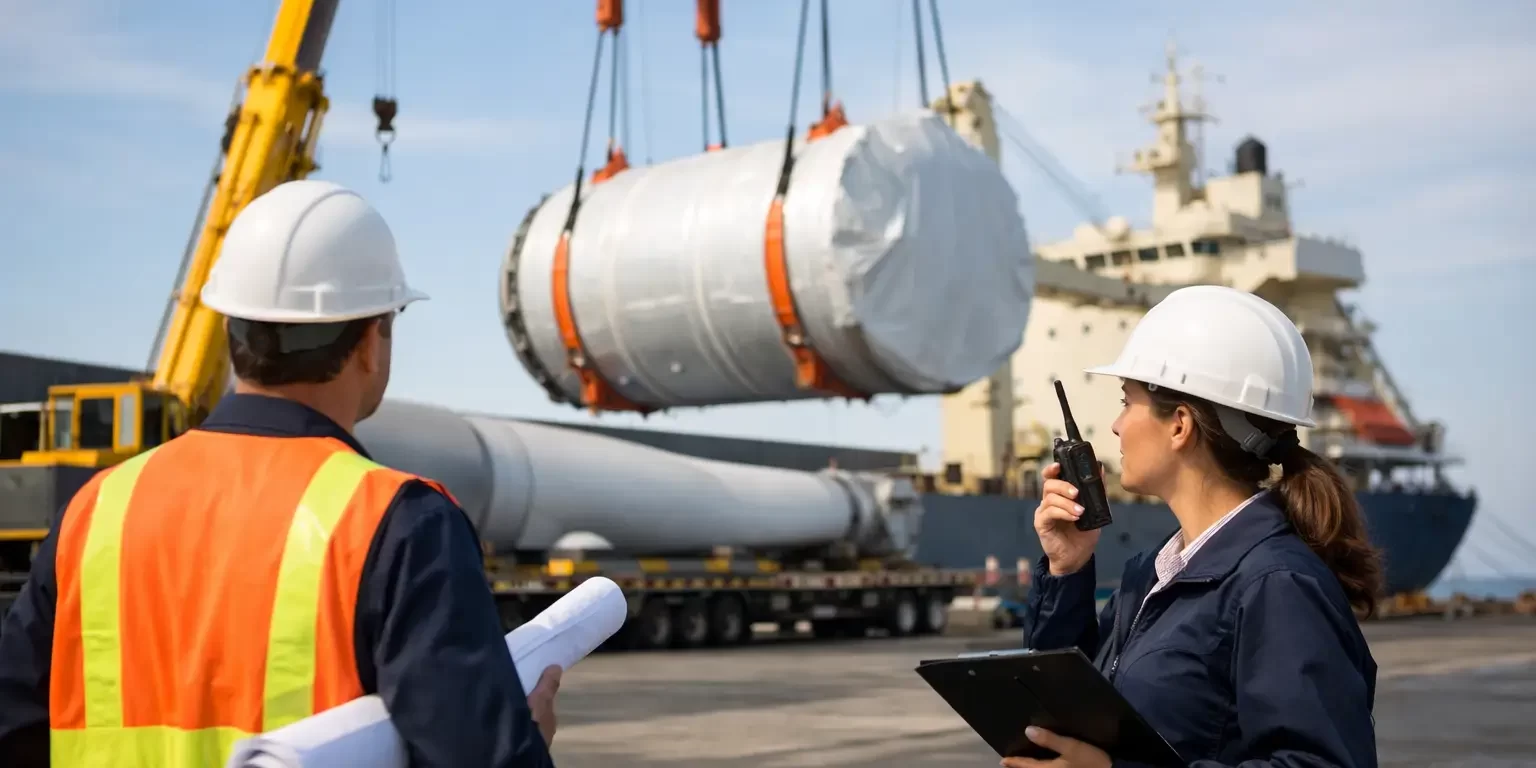
cargo should move by ocean breakbulk, flat rack, RoRo, air charter, truck, or a combination. It
also identifies supporting requirements: lifting plans, cargo
This is where experience shows. A standard booking team can move cargo from A to B. A
project cargo operation manages dependencies: if one oversized unit arrives before the site is
ready, storage costs climb; if one component clears customs late, installation crews sit idle. The
shipment is only one part of the business outcome.
Why project cargo needs a different logistics model
Routine freight can usually absorb minor schedule changes. A project shipment often cannot —
especially when it supports a plant expansion, infrastructure build, equipment replacement, or a
time-sensitive startup.
The core difference is complexity concentration: several high-risk variables appear at once —
non-standard dimensions, specialized equipment, customs scrutiny, permit lead times, and
delivery sites with limited access. When shipments cross borders, those factors multiply.
For freight moving between Costa Rica, the United States, and other markets, cross-border
execution requires local operational knowledge on both ends — at US gateways such as Miami
(PortMiami, Port Everglades, MIA) and at Costa Rican entry points such as Limón-Moín and
Caldera, cleared through the Dirección General de Aduanas. The best outcome usually comes
from one partner aligning international transport, customs brokerage, storage, and inland
handling under a single plan — not splitting the job across disconnected vendors.
Core capabilities to look for
A capable provider does more than book transport. It builds and controls the full execution path
across four areas:
- Transport planning and mode selection. Not every oversized shipment belongs on the
same routing. Some cargo needs a breakbulk vessel for size and lifting; some travels on flat
racks if dimensions and securing allow; some urgent components justify air freight when
downtime or penalties outweigh the premium. A strong provider explains the trade-offs clearly
— lower freight cost is not always lower total cost once schedule risk, demurrage, crane
coordination, and jobsite readiness are counted. - Customs and trade compliance. Project cargo draws extra customs attention because of
value, commodity type, unusual dimensions, or temporary-import structures. Classification,
commercial invoices, packing details, permits, and country-specific requirements must be
aligned before the cargo reaches the port or border. Customs brokerage cannot be an
afterthought; it has to be designed into the transport plan from the start. - Specialized handling and warehousing. Many shipments do not go straight from port to
site. They may need short-term or bonded storage, consolidation, repacking, or staged delivery
by installation sequence. When components arrive from different origins, warehousing becomes
schedule control, not just a storage line item. - Inland execution and last-mile coordination. The hardest leg is often the final one. Port
discharge can be simple compared with moving oversized cargo inland through restricted roads,
bridges, urban corridors, or industrial facilities. Route studies, escorts, municipal permits, lifting
equipment, and delivery windows all need coordination. If the provider can’t manage the last
mile, the value of the international plan drops fast.
When businesses typically need project cargo support
The need usually appears when cargo exceeds standard dimensions, or when shipment timing
is tied directly to a commercial milestone — manufacturing expansions, maintenance
shutdowns, renewable energy projects, infrastructure builds, and large equipment imports.
But size alone does not define project cargo. A shipment can fit in standard equipment and
still require project-level control if a late arrival would stop operations, miss a launch, or break a
customer commitment. Evaluate the need by operational impact, not just physical
measurements.
How to evaluate a project cargo logistics company
The right provider isn’t simply the one with carrier access — it’s the one that anticipates
problems early and controls execution across functions. Ask how it handles:
- Pre-shipment planning and cargo assessment.
- Customs coordination in the relevant trade lane.
- Storage, consolidation, and staged delivery.
- Destination delivery and last-mile heavy haul.
- Shipment visibility and how changes are communicated when schedules shift.
Also understand where the provider is strongest. Some excel at ocean procurement but are
weak on inland heavy haul; others are strong in customs and warehousing but lean on outside
parties for project planning. Partner networks are normal in international logistics — but the lead
operator must still control the plan and own the result. Long operating history matters here:
project cargo exposes process weaknesses quickly, and a provider that has handled complex
cargo across market cycles usually has better escalation paths, stronger carrier relationships,
and sharper judgment when conditions change.
Why integrated service matters in cross-border project cargo
Fragmented logistics creates avoidable risk. When transport, customs, warehousing, and final
delivery sit with separate providers and separate priorities, communication gaps appear exactly
where project cargo needs precision.
An integrated operator aligns documentation with transit milestones, stages cargo near the
delivery point, coordinates bonded or general storage when needed, and adjusts inland
execution if customs timing changes. That coordination is especially valuable for cargo moving
between Costa Rica and the United States, where execution depends on both international
reach and local market knowledge. Operating since 1976 with its own presence in Costa
Rica and the United States, SICSA manages transport, customs, storage, and specialized
cargo support under one plan — reducing handoff risk across the full move.
The cost question: lowest rate vs. lowest exposure
Project cargo decisions should not rest on freight rate alone. The cheaper route can become the
more expensive one if it adds handling points, longer dwell time, or schedule uncertainty around
permits and delivery appointments.
A disciplined plan weighs direct transport cost against exposure to delay, cargo damage,
customs disruption, site downtime, and contract penalties. Sometimes the lowest-cost option is
right; other times, paying more for tighter execution is the better business decision. A serious
project cargo logistics company helps you see total landed impact, not just quoted freight
charges.
The companies that manage project cargo well treat it as an operational commitment, not a
shipment transaction. If your cargo supports production, construction, or market deadlines,
choose a partner that can plan the exceptions before they become expensive problems.
Moving oversized or time-critical cargo between the US and Costa Rica?
SICSA plans the full path — mode selection, customs, storage, and inland delivery — and flags
the risks before your cargo ships.
👉 Request a project cargo assessment
Frequently asked questions
What is a project cargo logistics company? A provider that plans and controls the movement
of oversized, heavy, high-value, or irregular freight that can’t ship through standard containers. It
handles mode selection, special equipment, permits, customs, storage, and last-mile delivery as
one coordinated plan.
What’s the difference between project cargo and standard freight? Standard freight moves
through conventional containerized channels and can usually absorb small delays. Project
cargo needs special handling, equipment, route planning, or permits, and its timing is often tied
to an installation or production milestone — so it’s far less forgiving of delay.
When do I need project cargo logistics instead of regular freight forwarding? When cargo
exceeds standard dimensions or weight, requires special handling, or when a late arrival would
stop operations, miss a launch, or break a customer commitment. The trigger is operational
impact, not just size.
What transport modes are used for project cargo? Depending on dimensions, weight, and
urgency: ocean breakbulk, flat rack, RoRo, truck/heavy haul, or air charter — often in
combination. The right choice balances freight cost against schedule risk and total landed cost.
How is project cargo priced? Beyond base freight, pricing reflects special equipment, lifting
and securing, route surveys and permits, escorts, bonded or staged storage, and customs
handling. The relevant comparison is total exposure (delay, damage, downtime, penalties), not
the quoted rate alone.