


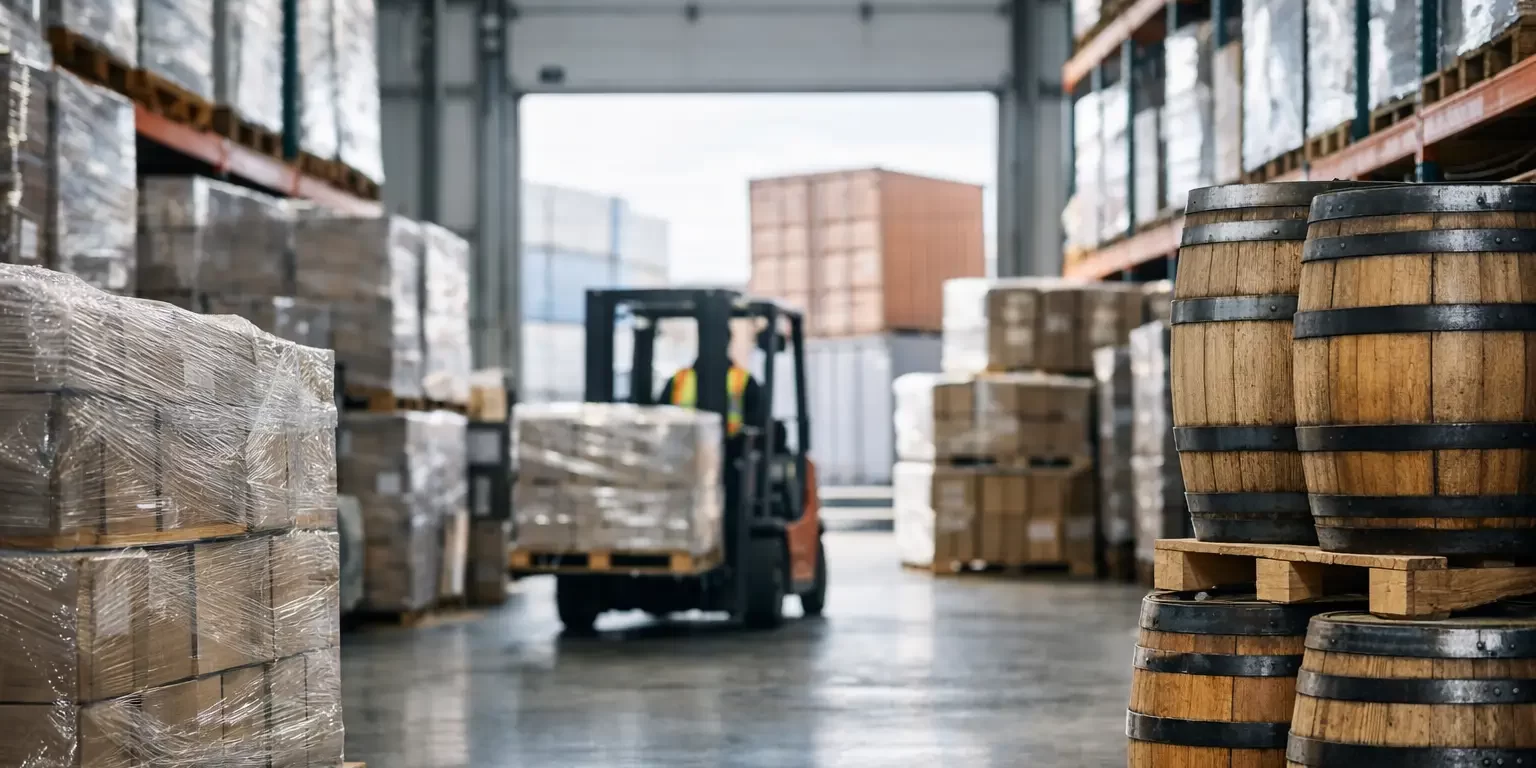
A bonded warehouse is a secured storage facility authorized by customs authorities to hold
imported goods before duties and taxes are paid. The cargo stays under customs control while
stored, which gives importers flexibility in timing, inventory release, and cash flow. Instead of
paying duties the moment goods arrive, a business can defer payment until the merchandise is
withdrawn for domestic use — or avoid those duties entirely if the goods are re-exported.
A shipment lands, but the goods are not ready for the domestic market yet. Maybe the buyer is
still finalizing distribution. Maybe documents are pending. Maybe the importer wants to delay
duty payment until inventory is actually needed. That is when the question matters: what is a
bonded warehouse, and when does it make operational sense to use one?
For importers, exporters, distributors, and manufacturers, this is not just a storage option — it is
a trade management tool. Used correctly, bonded warehousing supports compliance, reduces
financial pressure, and creates more control over cross-border inventory.
What is a bonded warehouse used for?
At a basic level, it stores imported merchandise that has not yet cleared into the local economy
through final duty payment. In practice, its use depends on the cargo, the country of import, and
the importer’s commercial plan. It matters most when businesses need time:
- Seasonal inventory brought in months before peak demand.
- A distributor staging goods near its market without absorbing the full landed cost
immediately. - A manufacturer waiting on downstream production schedules before releasing
components.
In each case, bonded storage creates a controlled pause between arrival and final customs
entry. It is also useful when cargo is intended for re-export: if the goods never enter the local
market, the importer may avoid duties that would otherwise apply to domestic consumption — a
material difference in total trade cost.
How a bonded warehouse works
When imported goods arrive, they move into an approved bonded facility instead of being
released into unrestricted domestic circulation. The operator must follow customs procedures
for receiving, storing, tracking, and releasing cargo. Inventory records are critical, because
customs authorities need visibility over what is stored, how long it stays, and what happens
when it leaves.
Goods can typically remain for a defined period set by local regulation. In the United States,
merchandise may stay in a customs bonded warehouse for up to five years from the date of
importation; in Costa Rica, a depósito fiscal operates under the terms set by the Dirección
General de Aduanas. During that time the cargo is secure but not fully imported in the ordinary
sense. Duties and taxes are generally suspended until one of two things happens: the goods
are formally entered into the domestic market, or they are exported.
If the importer releases only part of the inventory, duties are usually paid only on the portion
withdrawn — a meaningful advantage for companies managing staggered fulfillment, variable
demand, or phased sales.
Bonded warehouse vs. regular warehouse
The difference is simple but commercially significant:
| Regular warehouse | Bonded warehouse | |
|---|---|---|
| Customs status | Goods already cleared | Goods still under customs control |
| Duties/taxes | Already paid | Suspended until withdrawal or export |
| Function | Purely logistical | Logistics + customs-controlled |
| Controls | Standard | Stricter documentation, tracking, release procedures |
| Best for | Immediate domestic distribution | Aligning the duty event with actual inventory use |
The right choice depends on volume, timing, product type, and trade strategy.
Why importers use bonded warehousing
- Cash flow. Paying duties at arrival ties up capital long before inventory generates
revenue. Bonded storage defers that expense until the goods are sold, transferred, or
needed. - Planning. Shipments rarely arrive at the perfect moment for sales or production. Bonded
storage lets importers match freight arrivals to downstream demand instead of forcing
immediate release. - Risk management. If goods may be re-exported, redirected, or split between markets,
bonded storage can prevent unnecessary duty payments — depending on the applicable
customs framework. - Cross-border discipline. For companies operating across Costa Rica, the United
States, and other lanes, it creates an intermediate control point where cargo,
documentation, and release timing are managed with more precision.
What can be stored in a bonded warehouse?
Many imported goods qualify — consumer products, industrial parts, raw materials, electronics,
and commercial inventory. But eligibility depends on customs rules, commodity classification,
product condition, and special regulatory requirements. Some products need additional permits,
inspections, or handling standards; categories such as hazardous materials, food,
pharmaceuticals, or regulated technology may face stricter conditions or limits.
Bonded status does not override product compliance. It only changes the
customs and duty treatment during storage. Regulatory obligations tied to the
product itself still apply, which is why bonded warehousing should be evaluated
alongside customs brokerage and cargo-specific handling.
What is a bonded warehouse in customs planning?
From a customs-planning view, bonded warehousing lets businesses control when import
duties are triggered — relevant not only to logistics, but to finance, procurement, and
commercial teams. An importer of high-value goods may hold inventory in bond until confirmed
orders are in place; a multi-country distributor may use it as a staging point before reallocating
goods; a retailer may bring in product ahead of a selling season without absorbing the full duty
burden upfront.
These are useful strategies, not automatic savings. If the goods are eventually released into
the domestic market, the duties still apply. The value usually comes from deferral, flexibility, and
better timing — not outright elimination of cost.
Operational considerations before using bonded storage
Bonded warehousing works best when the operating model is clear. Before committing,
understand:
- How long goods can remain in storage.
- What reporting obligations apply.
- How partial withdrawals are handled.
- What documentation is needed at each step.
Because inventory is under customs supervision, recordkeeping must be accurate and
disciplined — product identification, lot traceability, and transaction history are part of
compliance, not administrative detail. Cost also deserves review: bonded storage improves
cash flow but may add storage fees, handling charges, and customs-related administrative
work. For some cargo profiles that trade-off is excellent; for others, immediate clearance into a
regular warehouse is more efficient. Evaluate it as part of a broader logistics plan, not an
isolated service decision.
When a bonded warehouse makes the most sense
It is often a strong fit when goods arrive well before they are needed, when importers want to
defer duty, when inventory may be re-exported, or when release timing needs to be phased. It
also suits high-value inventory or multi-market distribution models where timing and customs
treatment directly affect working capital.
It may be less attractive when turnover is immediate, duties are relatively low, or the added
control requirements outweigh the financial benefit. The decision is rarely one-size-fits-all — it
depends on shipment frequency, product value, market timing, and the customs structure
around the cargo.
For companies that need transportation, brokerage, and storage to work together without gaps,
an integrated partner can determine whether bonded warehousing supports the larger supply-
chain objective. Operating since 1976 with its own presence in Costa Rica and the United
States, SICSA combines customs brokerage, transport, and bonded and general
warehousing under one plan — which is exactly where timing, compliance, and inventory
control intersect.
A bonded warehouse is not just a place to hold cargo. It is a practical customs and inventory
tool for businesses that want more control over when goods are released, when duties are paid,
and how imported stock is positioned for the next step. When the trade flow is complex, that
control can be the difference between a shipment that simply arrives and a supply chain that
performs as planned.
Deciding whether bonded storage fits your import flow?
SICSA reviews your cargo, timing, and customs structure — then tells you whether bonded
warehousing actually improves your working capital, or whether direct clearance is the better
move.
👉 Talk to our team about bonded warehousing
Frequently asked questions
What is a bonded warehouse? A secured facility authorized by customs to store imported
goods before duties and taxes are paid. The cargo stays under customs control, so duties are
deferred until the goods are withdrawn for domestic use or re-exported.
How long can goods stay in a bonded warehouse? It depends on the country. In the United
States, merchandise may remain in a customs bonded warehouse for up to five years from the
date of importation. In Costa Rica, a depósito fiscal operates under the period set by the
Dirección General de Aduanas.
What is the difference between a bonded warehouse and a regular warehouse? In a
regular warehouse, goods have already cleared customs and duties are paid; storage is purely
logistical. In a bonded warehouse, the goods remain under customs control with duties
suspended, which means stricter documentation, tracking, and release procedures.
Do you pay duties on goods stored in a bonded warehouse? Not while they are in bond.
Duties are suspended until the goods are entered into the domestic market — paid only on the
portion withdrawn — or avoided if the goods are re-exported. It is duty deferral, not automatic
elimination.
What can be stored in a bonded warehouse? Most imported goods, including consumer
products, industrial parts, raw materials, and electronics. Eligibility depends on customs rules
and classification, and regulated categories such as hazardous materials, food, or
pharmaceuticals may face stricter conditions.